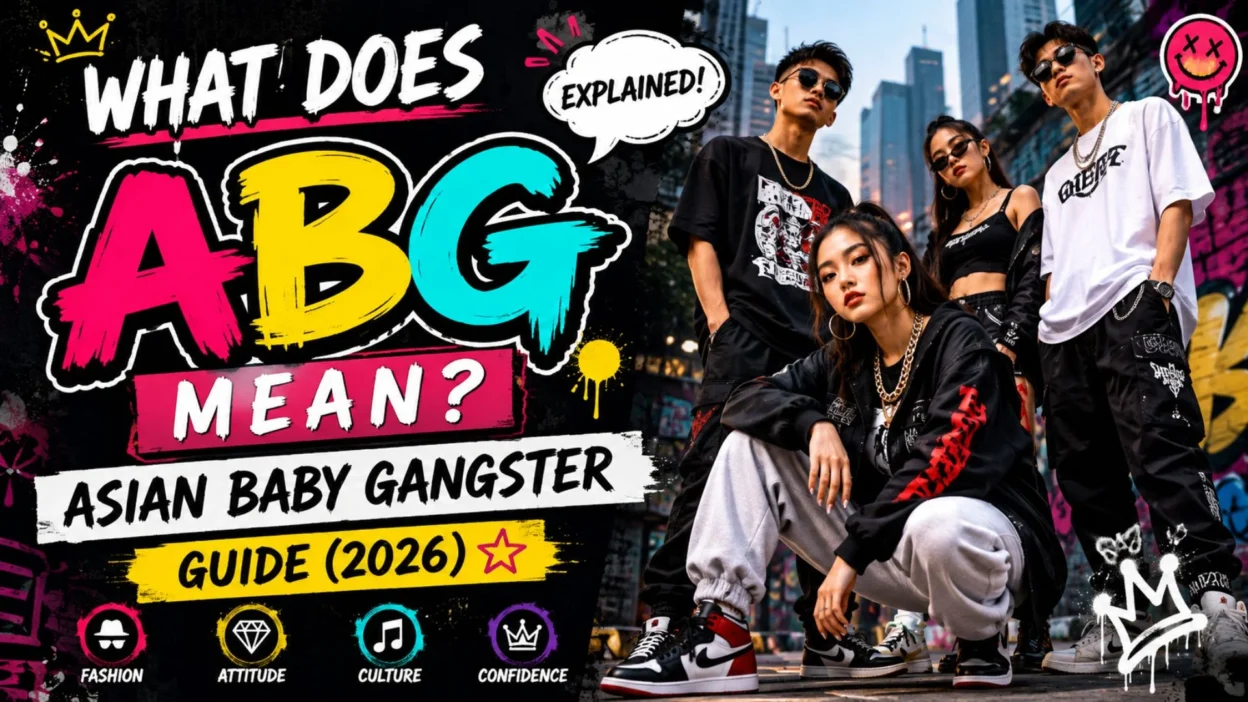
🔥 If you have scrolled through TikTok, Instagram, or even Facebook groups like Subtle Asian Traits in the last few years, you have probably stumbled across the acronym ABG. It pops up in hashtags, meme captions, and fashion haul videos. But unlike most internet slang that has a single, simple definition, ABG—which stands for Asian Baby Gangster—carries a backpack full of history, controversy, and shifting cultural meaning.
🤔 So, what exactly does it mean to be an “ABG”? Is it a badge of honor? An insult? A fashion statement? The answer, as you will discover, is a complicated web of 1980s street culture, 1990s hip-hop influence, 2010s internet virality, and 2020s identity politics.
📖 In this comprehensive deep-dive, we will unpack the gritty origins, the glamorous internet makeover, the heated debates surrounding the label, and how to navigate using this term in today’s hyper-aware social landscape. Whether you are a curious reader, a content creator, or a sociolinguistics nerd, this guide will turn you into an ABG expert.
The Gritty Origins – Where Did “Asian Baby Gangster” Come From? 🕰️
To understand the term Asian Baby Gangster, we have to rewind the clock to the 1980s in Southern California. This era saw a massive influx of Asian immigrants, particularly from Southeast Asia (Vietnam, Cambodia, Laos) and East Asia (Korea, China, Philippines). Many of these immigrant families settled in low-income, high-crime neighborhoods.
The Birth of Asian American Street Gangs 🏙️
As with many marginalized communities facing racism, poverty, and a lack of social support, youth gangs formed to provide protection, identity, and a sense of belonging. Groups like Asian Boyz, Wa-Ching, and Tiny Rascal Gang (TRG) rose to prominence.
In this dangerous environment, the term “Baby Gangster” was initially used within these circles to denote young, up-and-coming members who were tough, loyal, and willing to prove themselves. Adding “Asian” to the front simply specified the ethnic background.
- 1980s Meaning: A female (or young male, though predominantly female in later usage) actively involved in the Asian gang underworld.
- 1990s Meaning: The term pivoted slightly to include the girlfriends, sisters, or “groupies” of gang members. These were women who weren’t necessarily committing violent crimes themselves but were deeply embedded in the gang lifestyle—attending parties, carrying weapons for their partners, and adopting the aggressive “street” attitude.
The Hip-Hop Influence 🎤
The 1990s also saw the explosion of West Coast Hip-Hop and G-Funk culture. Asian American youth, like their African American and Latino counterparts, were heavily influenced by artists like Tupac and Snoop Dogg. The fashion of the time—baggy jeans, flannel shirts, bandanas, and gold chains—merged with the Asian street identity. The “ABG” of the 90s was often seen as a tough, no-nonsense woman who could hold her own in a masculine-dominated street environment.
The Internet Transformation – From Streets to Screens 📱
Fast forward to the 2010s. The rise of social media platforms—first Tumblr, then Instagram, and finally TikTok—radically altered the DNA of the ABG label. The gangs of the 80s and 90s largely dissolved or faded into obscurity, but the aesthetic remained.
The Role of “Subtle Asian Traits” 🌏
Arguably the biggest catalyst for the modern understanding of ABG was the Facebook group “Subtle Asian Traits” (SAT), created in 2018. While SAT primarily focused on relatable Asian immigrant family memes, it also popularized “ABG” as a distinct archetype. Young Asian women began using the hashtag #ABG to post their outfits and makeup looks. Suddenly, “ABG” was no longer about gang violence; it was about vibes.
The Rave and EDM Connection 🎵
As Electronic Dance Music (EDM) and rave culture exploded in the late 2010s, the ABG aesthetic found its perfect habitat. The typical ABG look—bold makeup, crop tops, and edgy accessories—fit perfectly into the neon-lit, high-energy festival scene.
Today, an “ABG” is often described by internet users as:
- A fiercely independent Asian woman.
- Someone who lives for raves and music festivals.
- A lover of boba tea, Korean BBQ, and late-night karaoke.
- A fashionista who rocks streetwear brands.
- A woman with a “brutal” or witty sense of humor.
Breaking Down the Modern ABG Aesthetic (The “Look”) 💄
If you are trying to spot a modern-day ABG on Instagram, look for these specific visual cues. This aesthetic has become so iconic that makeup tutorials specifically titled “How to Get the ABG Look” regularly amass millions of views.
The “ABG” Makeup Routine 👁️
Makeup is the cornerstone of the ABG identity.
- The Lashes: This is non-negotiable. ABGs are famous for their dramatic, wispy false eyelashes. Typically, they use “cat-eye” or “manga” lashes that flare out at the edges to create a sultry, elongated eye shape.
- The Brows: Sharp, highly-arched, and heavily laminated eyebrows. The goal is a “lifted” look that gives the face an instant facelift effect.
- The Base: Flawless, dewy, or semi-matte skin. Contouring is heavy, particularly around the nose and jawline.
- The Lips: Gradient “blurred” lips (popularized by K-beauty) or glossy, plump lips.
Fashion and Streetwear 👗
The modern ABG wardrobe is a mix of high-end streetwear and affordable fast fashion.
- Colors: Black is the dominant color. You will rarely see an ABG in pastel florals.
- Tops: Tube tops, corset tops, and cropped tank tops are staples.
- Bottoms: High-waisted, wide-leg cargo pants, parachute pants, or skin-tight mini skirts.
- Shoes: Chunky sneakers (think Nike Air Force 1s, New Balance 550s, or platform Converse) and chunky loafers.
- Accessories: Layered gold or silver necklaces, multiple ear piercings, and belly button piercings are virtually iconic.
Tattoos and Hair ✨
- Tattoos: Floral sleeves, script fonts (often in English or Chinese characters), and cherub/baby angel tattoos are highly popular.
- Hair: The “wolf cut” or shaggy layers. Color-wise, bleached ash blonde, “butter” blonde, or platinum silver are the classic ABG hair colors.
The Great Debate – Empowerment vs. Stereotype ⚖️
This is where the term gets sticky. The ABG label is arguably one of the most polarizing terms in Asian American internet culture. It sits right on the fence between reclamation and degradation.
The Case Against “ABG” (The Negative Side) ❌
Critics and sociologists point out several problems with the term:
- Perpetuation of the “Dragon Lady” Myth: Historically, Asian women in Western media have been stereotyped as either the submissive “Lotus Blossom” or the predatory, aggressive “Dragon Lady.” The ABG archetype plays directly into the latter.
- Gang Glorification: By using “Gangster” so casually, critics argue that we are trivializing the very real violence and trauma that plagued Asian communities in the 80s and 90s.
- Objectification: For a long time, the term was heavily used in incel and pick-up artist forums to objectify Asian women, reducing them to a fetishized “bad girl” fantasy.
- Class and Education Bias: Detractors often look down on the ABG aesthetic as “ghetto” or “low-class,” reflecting internalized racism and classism within Asian communities.
The Case For “ABG” (The Empowerment Side) ✅
Conversely, many young Asian women proudly claim the label for several empowering reasons:
- Rejecting the “Quiet Asian Girl” Trope: For decades, Asian women were expected to be quiet, obedient, and invisible. The ABG is loud, visible, and unapologetic. This is a powerful rejection of patriarchal norms.
- Created by Us, For Us: Unlike many racist stereotypes created by white outsiders, the modern ABG aesthetic was largely built and popularized by Asian women themselves on social media. It is an example of self-expression rather than external oppression.
- Community Building: #ABG has created a global community. Asian women who might feel isolated in their predominantly white towns can find “sisters” online who share their style and experiences.
ABG in Pop Culture and Media 🎬
While you may not see major Hollywood films explicitly using the term “ABG,” the influence is undeniable in music videos, K-pop, and streaming.
- K-pop Influence: K-pop idols like Lisa from BLACKPINK or Hwasa from MAMAMOO often embody the “badass, confident” ABG energy in their stage outfits and makeup, blurring the lines between Korean idol aesthetics and the ABG street look.
- Music Videos: Many Asian American rappers and R&B singers feature ABG aesthetics in their videos. Artists like Rich Brian, NIKI, and Joji often showcase this urban-Asian fusion look.
- Reality TV: Shows like Bling Empire feature cast members like Kevin Kreider and Kane Lim, who, while not ABGs themselves, represent the high-fashion, unapologetic Asian attitude that mirrors the ABG spirit.
Part 6: How to Use the Term “ABG” Respectfully 🤝
Because the term walks a tightrope between history and internet humor, using it incorrectly can get you into hot water. Here is a simple guide to navigating the term responsibly:
✅ When it is (Generally) Acceptable:
- Self-Identification: If a woman calls herself an ABG, it is a sign of personal empowerment. Follow her lead.
- Inside Asian Humor: Within Asian friend groups or on Asian-centric meme pages, it is usually used playfully.
- Style/Fashion Context: Discussing the “ABG makeup tutorial” or “ABG outfit inspo” is fine because you are referring specifically to an aesthetic, not a person’s life choices.
❌ When to AVOID Using It:
- As a Non-Asian: If you are not Asian, using this term to describe an Asian woman (even as a compliment) can come off as reductive and fetishizing. It is safer to compliment her style rather than labeling her identity.
- In a Professional Setting: Do not call your Asian female coworker an “ABG” at the office. It is inappropriate and unprofessional.
- To Generalize: Avoid statements like “All Asian girls are ABGs” because it erases the diversity of Asian womanhood.
The Future of the ABG Label 🔮
Language is a living thing, and the ABG label continues to evolve. As of 2025, we are seeing a split in the definition:
- The “Clean Girl” vs. “ABG” Aesthetic: The minimalist, “clean girl” aesthetic (subtle makeup, neutral colors, tennis skirts) is currently trending, which stands in direct contrast to the heavy, maximalist ABG look. This has led to debates online about which aesthetic is “better” or more “high-class.”
- The “ABG to CEO” Pipeline: A growing number of former “ABG” influencers are now successful business owners, makeup brand founders, and fashion designers. They are keeping the aesthetic but shedding the “Gangster” baggage, preferring simply “Asian Baddie” or “Asian Boss.”
- Generational Friction: Older Asian Americans (Gen X and Boomers) often find the term offensive due to its gang roots, whereas Gen Z and Millennials find it nostalgic or humorous.
Practical Tips: Using ABG Slang in Content Creation ✍️
If you are a blogger, marketer, or influencer looking to create content around this term, keep these best practices in mind:
- Context is King: Always frame the term with historical context. Explain that it has changed, so readers don’t accidentally assume you are glorifying gangs.
- Focus on Aesthetic: If you are writing a fashion piece, call it the “ABG Aesthetic” rather than the “ABG Lifestyle.” This separates the look from the ethics.
- Feature Diverse Voices: If you interview people about the term, include women who hate it and women who love it. Balance is essential.
- Avoid Clickbait: Do not use phrases like “Risky” or “Dangerous” to describe the modern ABG. It is misleading.
Frequently Asked Questions (FAQs) ❓
• Is “Asian Baby Gangster” a slur?
It is not classified as a formal ethnic slur like a racial epithet, but it is considered a stereotype. Many Asian women find it offensive, objectifying, and reductive. Others embrace it as a term of empowerment. The line depends entirely on the intent and the identity of the speaker.
• What is the difference between ABG and K-pop idol style?
While both share bold makeup, K-pop idols lean toward highly polished, experimental, and “stage-ready” fashion. The ABG aesthetic is more grounded in streetwear and casual nightlife—think hoodies and sneakers versus stage-ready sequins. Furthermore, K-pop idols are rarely involved in gang culture; the ABG label carries that heavy historical baggage.
• Why do some people call it the “Boba Girl” aesthetic?
Because the modern ABG is so heavily associated with drinking bubble tea (boba), many have colloquially renamed it the “Boba Girl” aesthetic to remove the violent undertones of the word “Gangster.” It is a softer, more food-centric way of describing the same look and attitude.
• Can guys be called ABG?
Typically, no. The term is almost exclusively used for women. For Asian men with a similar “gangster” aesthetic, terms like “ABZ” (Asian Baby Boy) or simply “Asian streetwear guy” are used, though these are far less popular.
• Is the ABG trend dying out?
Trends rotate, but the core elements of the ABG aesthetic—bold lashes, sharp brows, and edgy clothing—have become permanent staples in the beauty and fashion industry. While the hashtag might wane, the influence is here to stay.
Conclusion: More Than Just an Acronym 🏁
The term Asian Baby Gangster is a linguistic time capsule. It encapsulates the struggle of immigrant communities, the influence of Hip-Hop, the democratizing power of the internet, and the ongoing debate about who gets to define an identity.
For some, it is a painful reminder of past traumas and class divides. For others, it is a playful meme and a powerful symbol of taking up space in a world that often tries to make Asian women small.
Ultimately, the ABG label is whatever the person wearing it decides it is. If you take nothing else away from this guide, remember this: Labels are like clothes. They can fit perfectly, be the wrong size, or be used to judge someone unfairly. Before you slap the “ABG” tag on someone, ask them if they want to wear it.
💬 Share Your Thoughts!
What do you think about the ABG label? Do you love it, hate it, or find it funny? Drop a comment below and join the conversation. If you enjoyed this deep dive, don’t forget to subscribe to our newsletter for more fascinating breakdowns of internet culture, slang, and global trends.
I am a U.S.-based writer with a love for clever wordplay, lighthearted humor, and creative storytelling. She enjoys exploring the fun side of language and believes that even a simple sentence can make someone smile. When she’s not writing, Lily can be found reading short stories, sipping iced coffee, or collecting new puns for her notebook.